
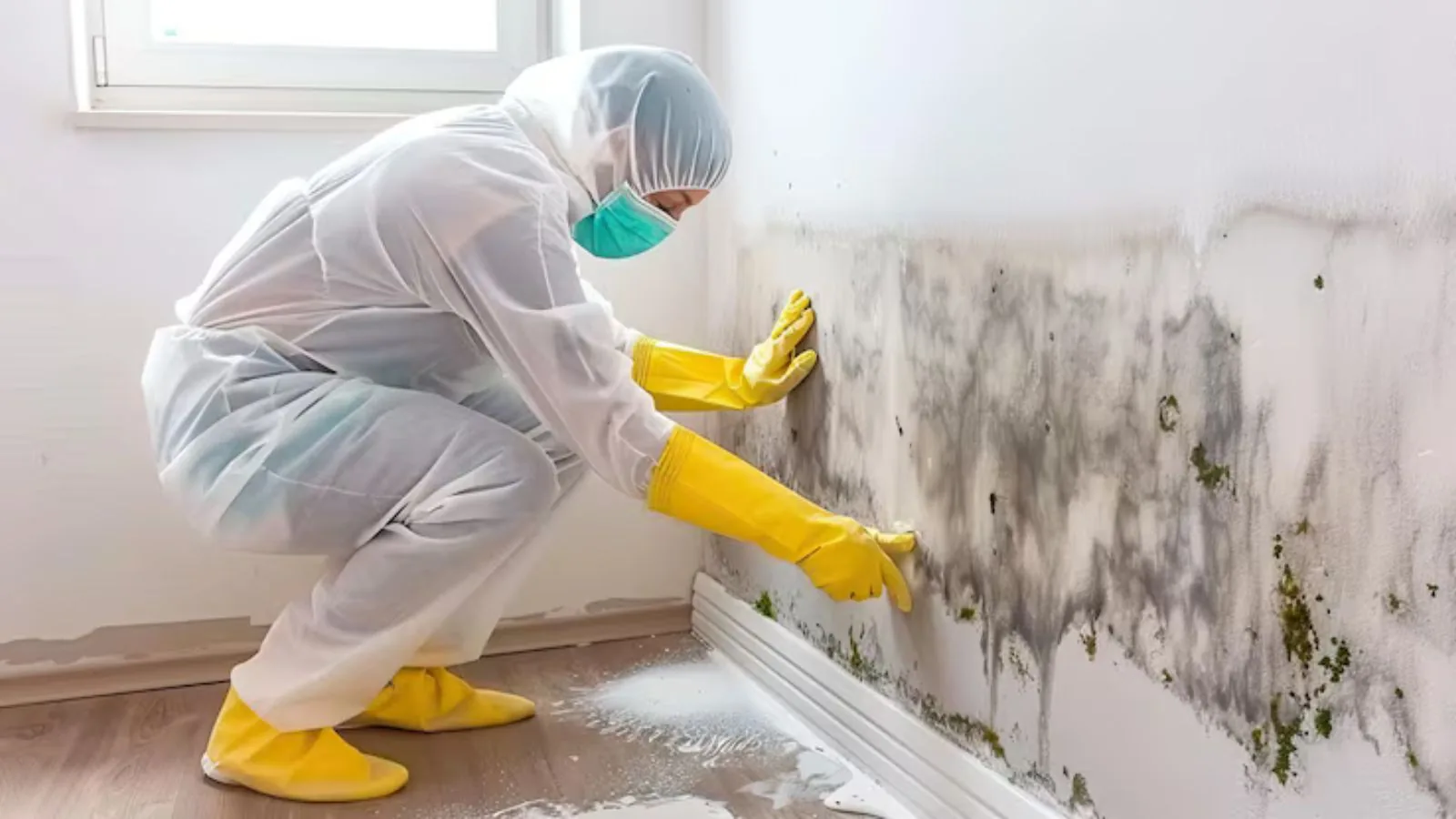
Mold grows where materials stay damp, and the usual cause is water damage that was not dried in time. That is why mold remediation sits next to the water damage pages on this site, not in place of them. The first step is always finding and fixing the moisture source, since removing mold without removing the moisture invites it back.
This page makes no health claims about mold. If you have health concerns, talk to a medical professional. What the page covers is the building side: what the work involves, what testing and clearance mean and what to ask before hiring anyone.
What mold remediation involves
- Find and stop the moisture source. A leak, a roof opening or a damp crawl space has to be fixed first.
- Contain the work area with plastic sheeting and negative air so spores are not spread to clean rooms.
- Remove materials that cannot be cleaned, such as affected drywall, insulation and carpet pad.
- Clean and treat surfaces that can be saved, such as framing, with HEPA vacuuming and wipe-down.
- Dry the area with structural drying until readings reach the dry standard.
- Rebuild the removed materials after the area is dry and, where used, after clearance testing.
| Location | Typical cause | Related page |
|---|---|---|
| Carpet and pad | Wet carpet left for days | Carpet water damage |
| Wall cavities | Slow plumbing or roof leaks | Wall and drywall repair |
| Crawl space and subfloor | Damp insulation and wood | Crawl space water damage |
| Under sinks and cabinets | Slow supply or drain leaks | Kitchen water damage |
Seeing or smelling mold after a leak? Call (833) 521-1033 to scope the work.
✆ Call (833) 521-1033ANSI/IICRC S520 and what it means
ANSI/IICRC S520 is the industry standard for mold remediation, and it is named here as a standard, not as a claim about any company. It describes how remediation is planned, contained and verified. When a contractor says they follow the standard, ask them to show how: the containment plan, the removal scope and the verification method.
Licensing is a state question, and this page does not prove it
Some states license mold work and others do not. This site does not claim a mold license for any company, and the generic wording used across the site is that crews are licensed and insured. Before you sign, ask the contractor for their license number and proof of insurance, and check them with the relevant state agency. The California Contractors State License Board has a license lookup, and it is the place to confirm.
Testing and clearance
Testing means sampling the air or surfaces to see what is there and how much. Clearance testing is done after remediation to check that the work area meets the target set in the plan. Both are often done by an independent party, not the remediation company, so the same company is not grading its own work. Whether you need testing depends on the situation, and many jobs proceed from a visual inspection and a moisture map.
A mold test result by itself does not say what to do. The scope comes from where the moisture is and what materials are affected. If an insurer, lender or buyer asks for testing, ask what standard and sampling method they expect before ordering it.
Selling or refinancing a home with mold
Home sales and loans can raise mold questions, and answers depend on the buyer, the lender and the contract. A lender or buyer may ask for a report, remediation records or clearance results. Keep invoices, photos, moisture logs and any independent test results, since they document what was done. Ask your agent or lender what they need, and ask a licensed professional about disclosure rules.
Insurance and mold
Mold coverage varies a lot. Some policies cover mold that follows a covered water loss, some limit the amount and some exclude it. See the posts on whether homeowners insurance covers mold and water damage and mold for the general picture. Check your policy or ask your insurer.
Local notes for Burlingame
Burlingame's creeks, storm drains and hillside runoff mean that homes near them can take in water and stay damp. The city's Building Division at 650-558-7260 can say whether rebuild work after remediation needs a permit. If a damp problem comes from a drain or creek concern, Public Works at 650-558-7670 handles those reports.
What sets the price of mold remediation
Mold jobs are priced by the area and the materials, and the scope is explained before work starts.
| Factor | Why it matters |
|---|---|
| Area affected | A closet differs from several rooms. |
| Materials | Drywall and insulation are removed, framing is cleaned. |
| Containment | Sheeting and negative air add labor. |
| Testing and clearance | Independent testing is separate. |
| Rebuild scope | Drywall, flooring and paint after removal. |
Want your real number? Call (833) 521-1033 and the scope and price are explained before work starts.
Calls come from ZIP codes 94010 and 94011, San Mateo and El Granada.
Frequently asked questions
Do you test for mold?
Testing is often done by an independent party so the remediation company is not checking its own work. Whether you need it depends on the situation, and the plan is built from the moisture map.
Is mold remediation the same as water damage restoration?
No. Water damage restoration removes water and dries. Mold remediation is a follow-on service for growth that has started. Drying the structure is the practical first defense.
Do you hold a mold license?
This site does not claim one. Crews are described as licensed and insured in general terms. Ask any contractor for license and insurance details and verify them with the state.
Will mold affect selling or refinancing my home?
It can come up. Buyers and lenders may ask for reports or clearance. Keep your invoices, photos and test results and ask your agent or lender what they need.
Does insurance cover mold?
Coverage varies. Some policies cover mold that follows a covered water loss, some cap it and some exclude it. Check your policy or ask your insurer.
Water still spreading or not sure what you are looking at? The line is open 24/7.
✆ Call (833) 521-1033