
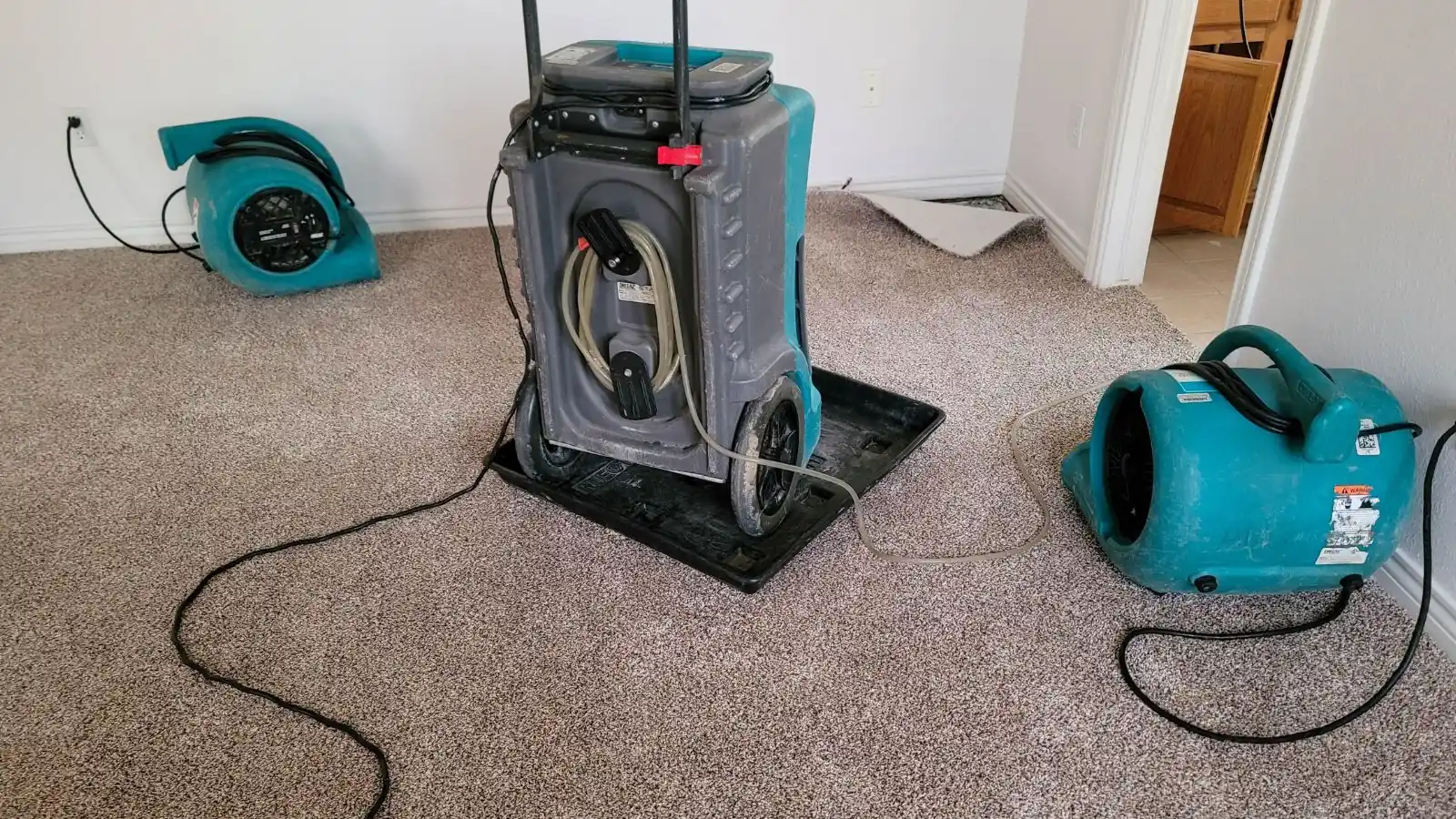
Structural drying is the phase that follows extraction, and it is where most water damage jobs are won or lost. Surfaces can look dry while framing and subfloor stay wet. Drying uses air movers and dehumidifiers to pull moisture out of materials, with moisture readings taken on a schedule so the dry standard is measured, not guessed.
Signs the structure is still wet after the water is gone
The symptoms matter because homeowners often assume a leak that stopped is a problem that ended. These are common signs that moisture is still in the structure.
- A musty smell that continues after the surface looks dry.
- Walls that feel cool, damp or soft to the touch.
- Paint or wallpaper that bubbles, peels or stains.
- Baseboards that swell or pull away.
- Floors that cup, buckle or feel soft underfoot.
- A moisture meter that reads high on drywall, framing or subfloor.
How drying is done
A moisture meter and thermal camera map the wet area first. Air movers push dry air across wet surfaces, and dehumidifiers pull the moisture out of the air so it can be removed from the building. Equipment is placed based on what is wet, not a fixed count, and the readings decide when it comes out.
| Equipment | Job | Where it is used |
|---|---|---|
| Air movers | Move air across wet surfaces to speed evaporation | Floors, wall bases, carpet and cavities |
| Dehumidifiers | Remove moisture from the air so materials keep drying | Whole rooms and enclosed areas |
| Wall cavity drying | Moves dry air into cavities through small openings | Drywall and framing that cannot be fully opened |
| Moisture meter and thermal camera | Find and track wet materials | Every phase, before and after equipment is set |
Walls or floors still damp after a leak? Call (833) 521-1033 to scope the drying.
✆ Call (833) 521-1033Readings, not guesses
Different materials have different dry standards, so the crew records starting readings, checks them again on a schedule and compares them against dry reference readings from unaffected parts of the building. Equipment stays until the structure reaches the dry standard. Logged readings are also what an adjuster typically wants to see. The post on moisture readings after water damage explains what the numbers mean.
The industry standard for water damage restoration is ANSI/IICRC S500, which is named here as a standard. This site does not claim certification or compliance by any particular company.
We use the equipment, you do not rent it
A common question is whether drying equipment is rented by the homeowner or the crew. The equipment is used by the restoration crew and is not rented to you. The crew sets it up, monitors it, adjusts it and removes it when readings are dry. Homeowners are only asked to keep it running and not move it.
What happens during the drying days
Drying usually runs over several days. The crew returns to take readings, move equipment and adjust to what the meters show. You will hear fans and dehumidifiers, and the home may feel warm. Keep doors and windows closed so humidity does not come back in. If a wall cannot be dried in place, a section of drywall is cut out so air can reach the framing.
Drying follows water extraction on most jobs, and it ties into every other restoration page on this site, from walls to carpet and hardwood.
Why drying matters for mold
Mold needs moisture, so drying the structure quickly is the practical way to limit the chance of growth. This page makes no health claims. If you already see or smell mold, see the mold remediation page.
Local notes for Burlingame
Burlingame has older homes with plaster walls and newer drywall homes, and each dries differently. Plaster holds moisture longer and needs more careful monitoring. The city's Building Division at 650-558-7260 can say whether repair work after drying needs a permit.
What sets the price of structural drying
Drying is priced by what is wet and for how long, not by a single flat number.
| Factor | Why it matters |
|---|---|
| Area and materials | Framing, plaster and subfloor dry more slowly than drywall. |
| Equipment count | Set by the moisture map. |
| Days of drying | Depends on readings and conditions. |
| Monitoring visits | Logged readings each visit until the dry standard. |
| Containment and access | Hard-to-reach cavities add time. |
Want your real number? Call (833) 521-1033 and the scope and price are explained before work starts.
Calls come from ZIP codes 94010 and 94011, San Mateo and El Granada.
Frequently asked questions
How long does structural drying take?
It depends on the materials, the amount of water and the conditions. Equipment stays until moisture readings reach the dry standard, which is often a matter of days.
Do I rent the drying equipment?
No. The equipment is used by the crew, who set it up, monitor it and remove it. You are not renting it.
How do you know the structure is dry?
By taking moisture readings on a schedule and comparing them to dry reference readings. The numbers, not appearance, decide.
Will the equipment raise my electric bill?
Air movers and dehumidifiers use electricity, and the extent depends on how many run and for how long. Documentation of the equipment can help when discussing it with your insurer.
Can I just open windows and use fans?
For a small damp spot it can help. For wet walls, subfloor or carpet pad, it usually is not enough, and ambient humidity can slow drying.
Water still spreading or not sure what you are looking at? The line is open 24/7.
✆ Call (833) 521-1033