
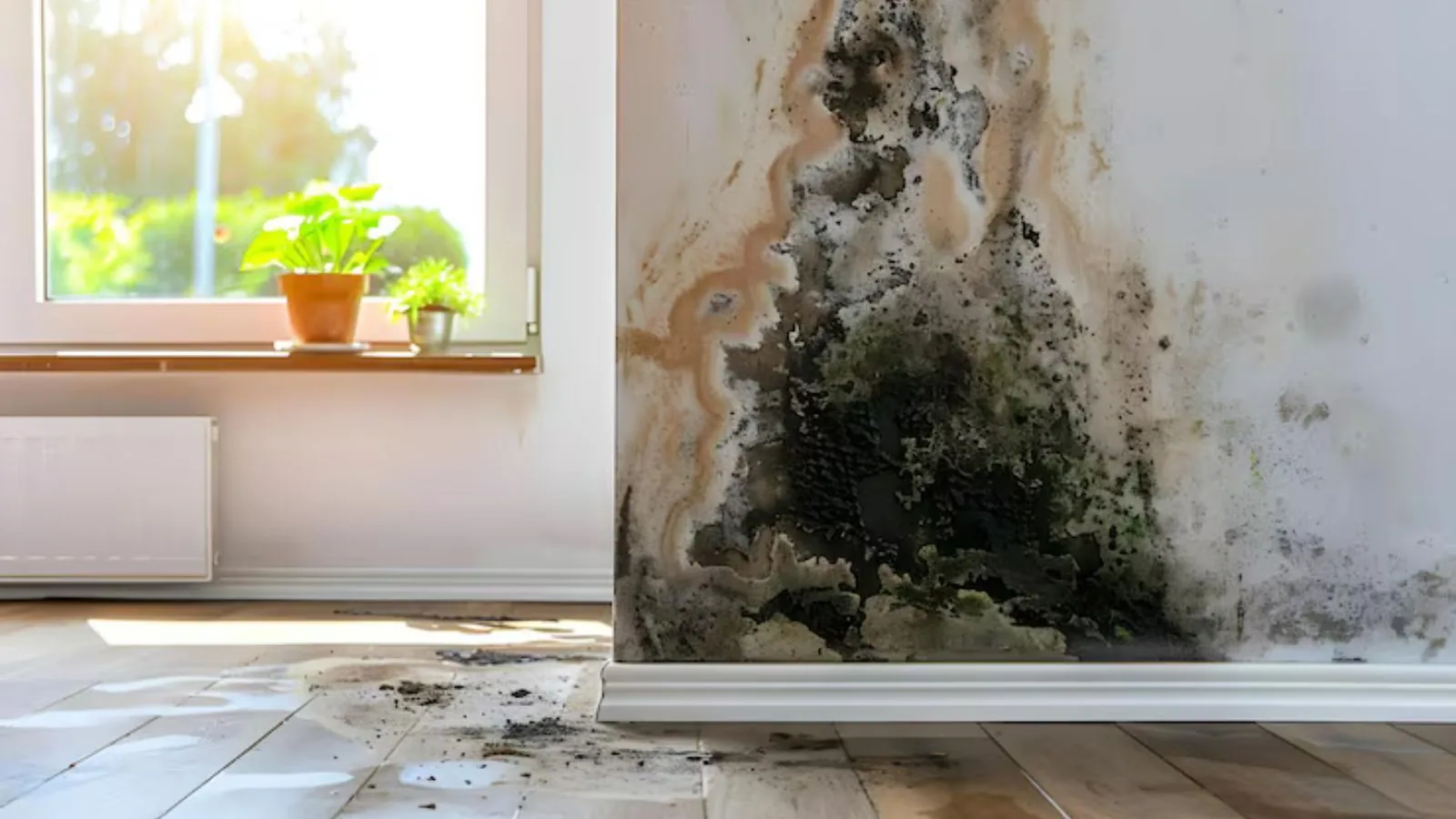
Mold is a moisture problem. It grows on materials that stay damp, and water damage is one of the usual ways that happens. This guide covers the building side of the link: why moisture matters, what signs to look for and what to do. It makes no health claims, and anyone with health concerns should talk to a medical professional.
Why moisture is the key
Mold needs moisture, organic material to grow on and time. Drywall paper, wood, carpet pad and insulation provide the material, and a wet structure provides the moisture. Removing the moisture, by fixing the source and drying the structure, is the practical way to stop growth. Cleaning mold off a surface without fixing moisture is a temporary measure.
Timing depends on the situation
People often ask how fast mold appears. The honest answer is that it depends on the material, the temperature, the humidity and how wet the material is. This guide does not give a number of hours. What the building evidence says is that materials left damp for days are in a worse position than materials dried quickly, which is why structural drying with logged readings is the first defense.
Signs to look for
- A musty smell that continues after surfaces look dry.
- Discoloration or spotting on walls, ceilings, baseboards or the back of cabinets.
- Bubbling or peeling paint and wallpaper.
- Carpet or pad that stays damp or smells.
- A moisture meter that reads high on drywall, framing or subfloor.
| Place | Why | Related page |
|---|---|---|
| Wall cavities | Insulation holds water against framing | Wall and drywall repair |
| Under carpet | Pad holds water against the subfloor | Carpet water damage |
| Crawl spaces | Enclosed and slow to dry | Crawl space water damage |
| Under sinks | Slow leaks go unnoticed | Kitchen water damage |
What to do first
- Find and stop the moisture source.
- Dry the area with fans and a dehumidifier if it is small, or call for a moisture map if it is larger.
- Remove soaked porous materials that cannot be dried, such as carpet pad.
- Do not paint or seal over a damp surface.
- If growth is visible over a large area, see the mold remediation page for containment, removal and testing.
A small leak versus a large loss
Scale changes the answer. A small, clean spill that is wiped up and dried within a day or so rarely turns into anything. A wet wall cavity, a soaked carpet pad or a crawl space that stays damp for weeks is a different situation, because the material stays wet and nobody can see it. The practical test is whether you can reach and dry every wet surface. If you cannot, a moisture map is worth more than guessing.
It is also worth separating mold you can see from moisture you cannot. Visible growth is one sign, but a meter reading that stays high on a wall that looks fine is an earlier warning. Acting on the reading is a smaller job than waiting for the spots.
Do you need testing?
Testing is sampling the air or surfaces. It is often done by an independent party, and whether you need it depends on the situation. A moisture map and a visual inspection decide most of the scope. If an insurer, lender or buyer asks for testing, ask what standard and sampling method they expect. ANSI/IICRC S520 is the industry standard for mold remediation and is named here as a standard, not as a claim about any company.
Questions to ask a contractor
- Will you find and tell me the moisture source before removing anything?
- How will you contain the work area so spores do not spread to clean rooms?
- Which materials will be removed and which cleaned, and why?
- Who will do clearance testing, if any, and is that party independent?
- Can you show me your license number and proof of insurance so I can verify them?
Those questions apply to any contractor, and the answers tell you whether the scope was built from readings or from a template. For wording around licensing and standards, see the mold remediation page.
A Burlingame note
Burlingame sits between hillsides and the Bay, and the city names seven creeks that carry water through town. After heavy rain, homes near creeks and low areas can stay damp longer, and a damp crawl space or lower wall is the kind of place the signs above show up. The city says creeks west of El Camino Real run along private properties and are maintained by their owners, which is a reason to keep channels clear of debris.
If the dampness comes from a storm drain or a creek, Public Works at 650-558-7670 handles those reports. For water inside the building, see flood damage cleanup and the page for El Granada, where coastal moisture adds another source.
Frequently asked questions
How fast does mold appear after water damage?
It depends on the material, temperature, humidity and how wet it is. This guide does not give a number of hours. Drying quickly is the practical defense.
Can I just wipe mold off?
On a small area of a hard surface, cleaning can help, but it does not fix the moisture. Without fixing moisture, it can return.
Do I need a mold test?
Not always. Many jobs proceed from a moisture map and visual inspection. If a lender or buyer asks, ask what standard they expect.
Is mold covered by insurance?
Coverage varies. Check your policy or ask your insurer.
Where in Burlingame is dampness most likely to linger?
This page makes no claim about particular areas. Homes near creeks and low spots can stay damp after heavy rain, and the city's Public Works at 650-558-7670 handles creek and storm drain concerns.
Water still spreading or not sure what you are looking at? The line is open 24/7.
✆ Call (833) 521-1033