
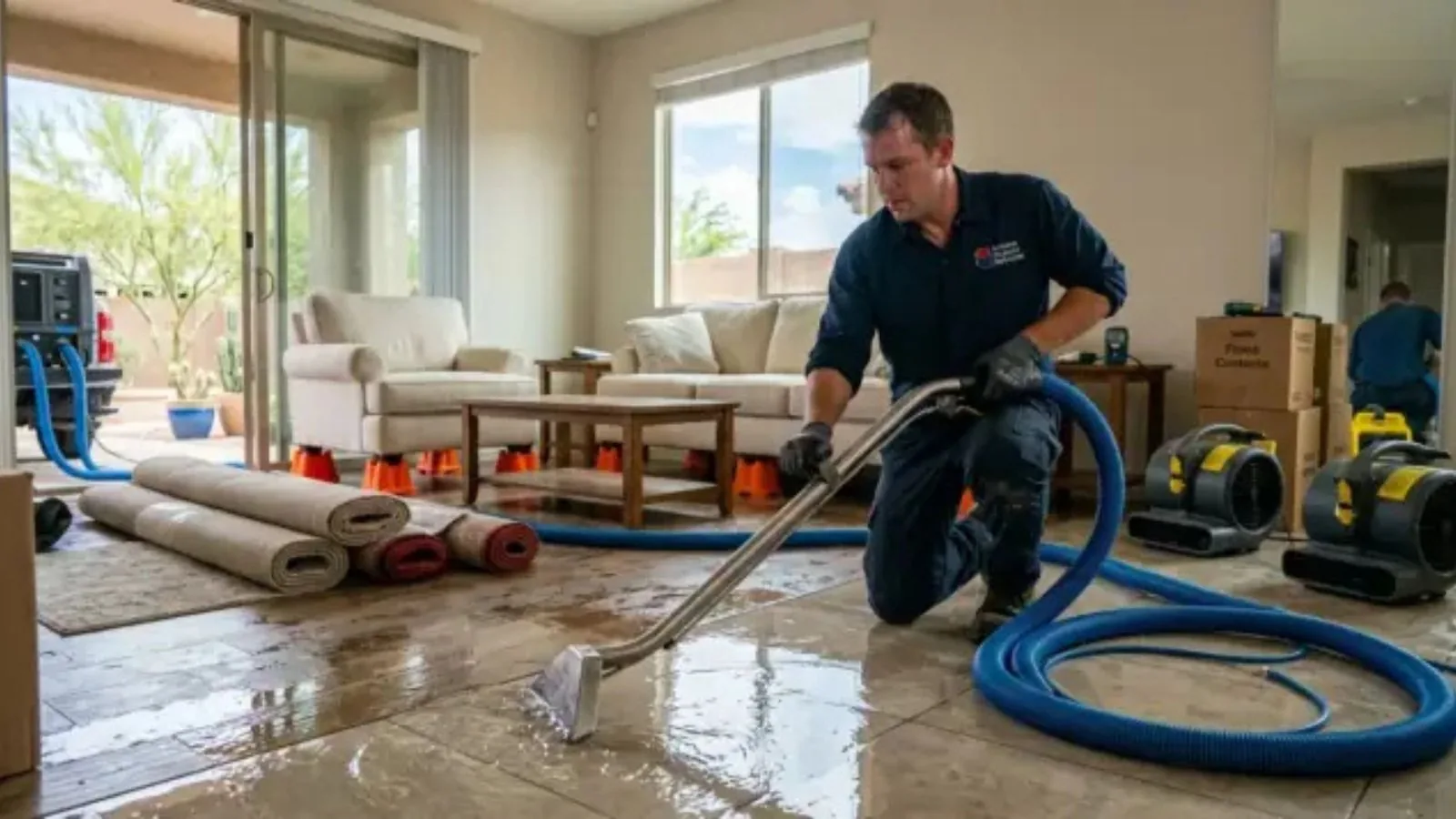
Water extraction is the first physical step in any flood or leak response. If water is standing on a floor in Burlingame right now, the line is open 24/7, so call before the water finds its way into the subfloor. While you wait, shut off the main water valve if the water is still coming, lift furniture and electronics out of the wet area, and keep everyone out of the room if water is touching outlets or an electrical panel.
Extraction removes liquid water. It does not dry the building. Pumps and extraction units pull standing water and the water held in carpet and pad, and then structural drying takes over to remove the moisture that soaked into wood, drywall and framing. Treating the two as one step is how a floor ends up looking clean while the wall behind it stays wet.
When standing water is an emergency
Water on the floor is an emergency when it is still rising, when it came from a source you cannot stop, when it is touching electrical equipment, or when it has been there long enough to soak into carpet, baseboards and the lower wall. A small puddle from a tipped bucket is different from an inch of water across a laundry room, and the second case needs equipment, not towels.
Water from a supply line is clean when it first escapes, but the category can change the longer it sits or the more it touches. Water that came up through a drain or from outside the building is contaminated from the start, and that case follows the sewage backup or flood damage process instead.
Electrical safety comes before extraction
If water is touching outlets, a panel, a power strip or a running appliance, stay out of the room. Turn off power only if you can reach the panel while standing on dry ground. If you cannot, call 911 or the utility first, then call the restoration line. Never stand in water to flip a breaker.
How extraction is done
The method depends on what the water is sitting on. Hard floors and concrete are cleared with submersible pumps and squeegee-style extraction tools. Carpet and pad are worked with weighted extraction wands that pull water up out of the fibers, and in many cases the pad is lifted and removed because it holds water long after the surface looks drier. Truck-mounted extraction units handle large volumes, while portable units reach upstairs rooms and tight spaces.
| Surface | Typical method | What happens next |
|---|---|---|
| Concrete or tile | Submersible pump, then squeegee extraction | Floor dries quickly. Baseboards and lower walls are checked with a moisture meter. |
| Hardwood or laminate | Surface extraction, then drying mats | Boards can cup if drying is slow. See hardwood floor water damage. |
| Carpet over pad | Weighted wand extraction, pad usually removed | Carpet is dried in place or lifted. See carpet water damage. |
| Garage or utility room | Pump and floor extraction | Walls, stored boxes and the bottom plate of framing are checked for wicking. |
Water still on the floor? The emergency line is open every hour of every day.
✆ Call (833) 521-1033What a Burlingame call usually sounds like
Callers describe it in plain words: ankle-deep water in a laundry room, a garage that took in rain, a bathroom leak that dropped water through the ceiling below, or a pipe that let go while everyone was out. Each of those has a different path for the water. A bathroom leak spreads sideways under flooring and down into the ceiling cavity. A garage flood sits on concrete but wicks into drywall and stored belongings. A laundry room leak runs under cabinets and out through baseboards.
That is why extraction starts with a quick assessment of where the water went, not just where it is visible. A moisture meter and a thermal camera show wet drywall and subfloor that look dry. Mapping the wet area before extraction ends tells the crew how much drying equipment the next phase needs.
Local conditions that make water show up fast
Burlingame sits between the hills and San Francisco Bay, and the city names seven creeks that carry stormwater down toward the Bay. After heavy rain the storm drain system can be overloaded at the same moment as the sewer, and the city's Public Works Department handles emergency flooding, blocked storm drains and creek concerns at 650-558-7670. If the water is coming from the street, a drain or a creek rather than from inside your plumbing, that call goes to the city while the extraction call goes here.
During the New Year's Eve storm of 2022, local reporting said Public Works took more than 200 emergency calls. A storm that large leaves more properties waiting for help at once, which is a good reason to call the moment water appears rather than after it has gone down on its own.
Extraction is not the same as yard or pool pumping
Pumping a flooded yard, a swimming pool or a drainage swale is a different job, and this service does not cover it. Water extraction here means removing water from inside buildings: living areas, garages, utility rooms and commercial spaces. If your situation is a yard that will not drain, a drainage contractor is the right trade, and a restoration crew can handle whatever water reached the house.
What sets the price of water extraction
Extraction is usually the smaller part of the invoice, and the scope depends on a handful of things you can describe on the phone. The goal is to explain scope and price before the crew starts, with numbers tied to those factors.
| Factor | Why it matters |
|---|---|
| Water category | Clean supply-line water extracts without added treatment. Contaminated water adds protective equipment and disposal. |
| Depth and area | An inch of water across several rooms moves more volume than a deep puddle in one. |
| Surface type | Carpet and pad take more labor than concrete. Hardwood needs drying equipment immediately after. |
| Access and floor level | Upstairs and tight spaces need portable units rather than truck-mounted equipment. |
| Follow-on drying | Extraction is followed by drying days, and the equipment count depends on what got wet. |
Want your real number? Call (833) 521-1033 and the scope and price are explained before work starts.
Insurance and documentation
Sudden and accidental water, such as a failed supply line or an appliance hose, is often covered by homeowners insurance. Flood water from outside is usually excluded and needs separate flood coverage. Check your policy or ask your insurer. During extraction the crew photographs the affected areas and records starting moisture readings, which gives your adjuster a documented starting point.
Calls come in from Burlingame ZIP codes 94010 and 94011 as well as nearby San Mateo and El Granada. If water is standing in a San Mateo home, the same line answers. After extraction, the usual next steps are burst pipe repair planning if a pipe caused it, or basement cleanup if the water sat below grade.
Frequently asked questions
Do you handle water extraction emergencies at night or on weekends in Burlingame?
Yes. The emergency line is open 24/7, including nights, weekends and holidays. Call, say where the water is and what is causing it, and shut off the main valve if the source is still running and the valve is safe to reach.
How is extraction different from drying?
Extraction removes liquid water with pumps and extraction units. Drying removes the moisture that soaked into wood, drywall and framing, using air movers and dehumidifiers over several days. Both are needed, and skipping the second is a common reason damage reappears.
Can I use a wet vacuum myself?
For a small clean spill, a wet vacuum can help. For water across a room, water that touched carpet pad, or any water that came from a drain or outdoors, it is not enough, and contaminated water should not be handled without protective equipment.
Do you pump yards, pools or driveways?
No. Water extraction here covers water inside buildings. Yard and pool pumping is a different service, and a drainage or pool contractor is the right call for it.
What will extraction cost?
The scope and price are explained before work starts. It depends on the water category, how much water is standing, what surface it is on and how many rooms are involved. Drying that follows extraction is scoped separately.
Water still spreading or not sure what you are looking at? The line is open 24/7.
✆ Call (833) 521-1033