
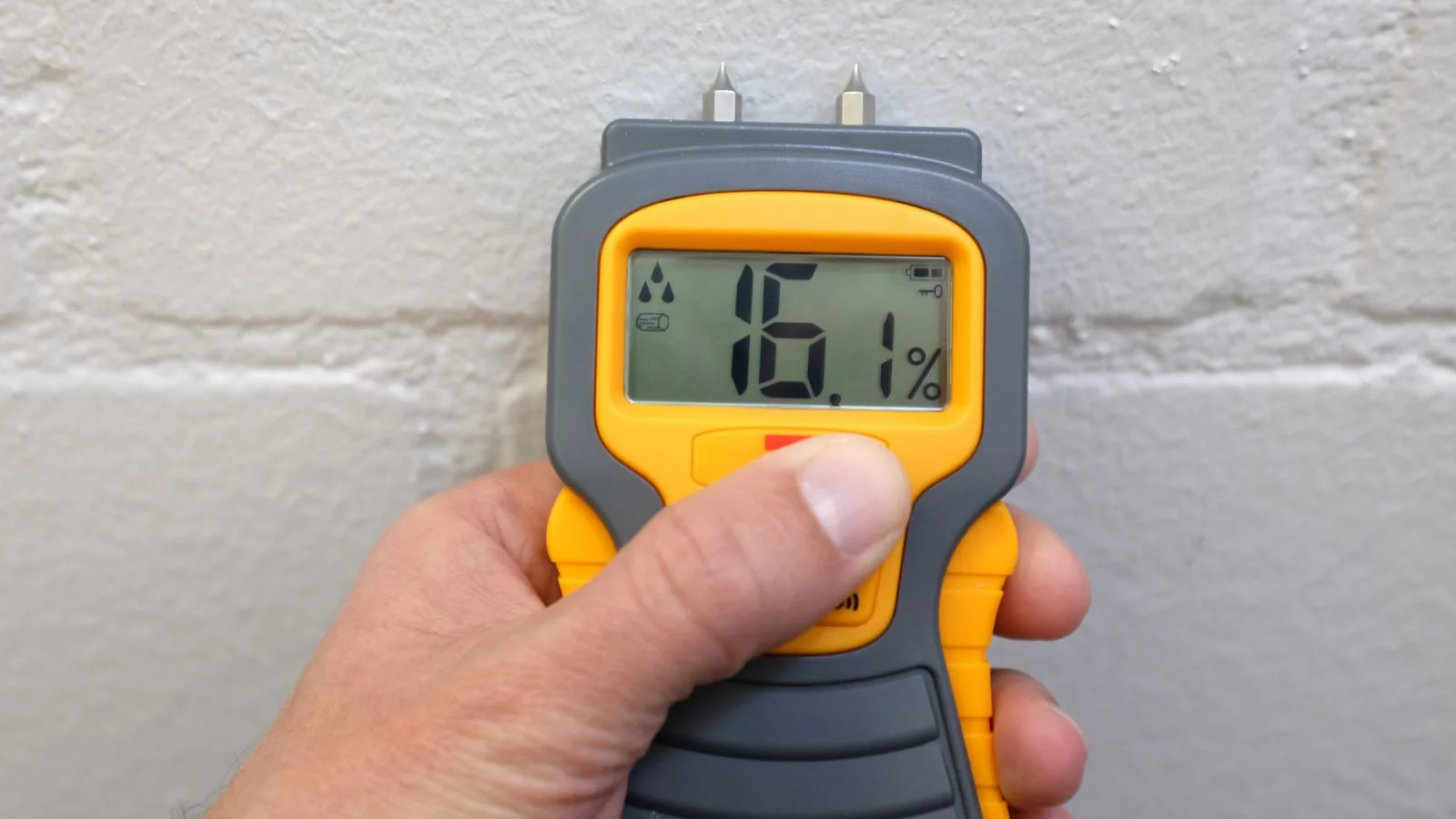
After water damage, the question is not whether the surface looks dry. It is whether the structure is dry, and that is measured. Moisture readings record how wet materials are at the start, how fast they are drying and when they reach a normal level. They are also the records an insurer may ask to see.
The tools
| Tool | What it shows | Limits |
|---|---|---|
| Pin moisture meter | Moisture in wood and drywall by pushing pins into the surface | Reads the spot it touches |
| Pinless meter | Scans below the surface without damage | Readings depend on material and thickness |
| Thermal camera | Shows temperature differences that can reveal wet areas | Does not measure moisture directly |
| Hygrometer | Measures humidity and temperature in the air | Shows conditions, not materials |
A thermal camera is good at finding where to look. A meter confirms how wet it is. Using both together is how crews map a wet area without cutting into every wall.
Reading the numbers
Different materials have different normal levels, and meters use different scales for different materials. That is why the useful comparison is against a dry reference reading taken from an unaffected part of the same building and the same material. A number by itself means little. A number compared with a dry reference, and tracked over several visits, tells the story.
- Day one: starting readings on wet materials and dry reference readings on unaffected ones.
- Each visit: readings at the same marked spots so the trend is clear.
- Final: readings at or near the dry reference, then equipment removal.
The industry standard
ANSI/IICRC S500 is the industry standard for water damage restoration, and it is named here as a standard, not as a claim about any company. It describes how water damage is assessed and dried, including monitoring. If a contractor says they follow it, ask to see the log.
What a good drying log looks like
- Readings dated and tied to marked locations, such as a wall, a floor section or a cabinet.
- A dry reference reading from an unaffected area.
- Equipment counts and placements noted for each visit.
- A final set of readings showing materials at or near dry reference.
A worked example of a drying log
Picture a bathroom leak that wet the hallway wall and the carpet beside it. On day one the crew records a high reading on the wall base, a lower one halfway up and a dry reference reading on the opposite wall. On day two the wall base has dropped but is still above the reference, so the equipment stays. On day three the readings match the reference, and the crew pulls the equipment and records the final set.
Notice what the log does. It shows the trend, it explains why equipment stayed a third day and it gives the adjuster dated numbers instead of a statement that the wall felt dry. If a wall reading stalls and stops dropping, that is a sign something is still feeding it, such as a second leak or wet insulation, and the crew investigates before removing equipment.
Why it matters for the claim and for mold
Logged readings show what was wet and when it was dried, which supports the cost of drying equipment on an invoice. They also show that moisture was dealt with, which matters because mold needs moisture. This post makes no health claims, and the page on mold remediation covers what happens when growth has started. For how the drying itself runs, see structural drying.
Questions to ask
- Where were the dry reference readings taken?
- Can I see the log after each visit?
- What reading will you accept as dry for each material?
- Who decides when the equipment comes out?
Common misunderstandings
- A dehumidifier alone does not dry framing. Air movers and dehumidifiers work as a pair.
- Readings from a single spot do not prove a wall is dry. Several marked locations do.
- A thermal camera image is not a moisture reading. It shows temperature differences that may point to wet material.
- A reading that stops falling is not finished. It means something is still feeding the moisture or the equipment is placed wrong.
If a contractor cannot show you a log or says a wall is dry because it feels dry, ask for numbers. A short list of dated readings is a reasonable request, and a crew that follows the process will have it.
A Burlingame note
Burlingame has older homes with plaster walls and newer drywall homes, and the two read differently. Plaster holds water longer and needs careful monitoring over more visits, so a drying log for an older home should expect more readings, not fewer. That is a practical reason to ask how many visits the plan includes.
Many local homes also sit on raised foundations, where the subfloor and joists are the materials to check. See crawl space water damage for how those are handled. The city's Building Division at 650-558-7260 can say whether repair work after drying needs a permit, and the San Mateo page covers the neighboring city.
Frequently asked questions
Does a dry surface mean a dry wall?
No. Surfaces can look dry while framing and subfloor stay wet. Meters and thermal cameras check what you cannot see.
What is a dry reference reading?
A reading from an unaffected area of the same material, used as the target for drying.
Can I ask for the moisture log?
Yes, and you should. It is a record your insurer may also ask for.
How many visits does drying take?
It depends on the materials and conditions. Readings, not a fixed number of days, decide.
Do older plaster walls dry differently?
Yes. Plaster holds water longer and needs careful monitoring.
Water still spreading or not sure what you are looking at? The line is open 24/7.
✆ Call (833) 521-1033