
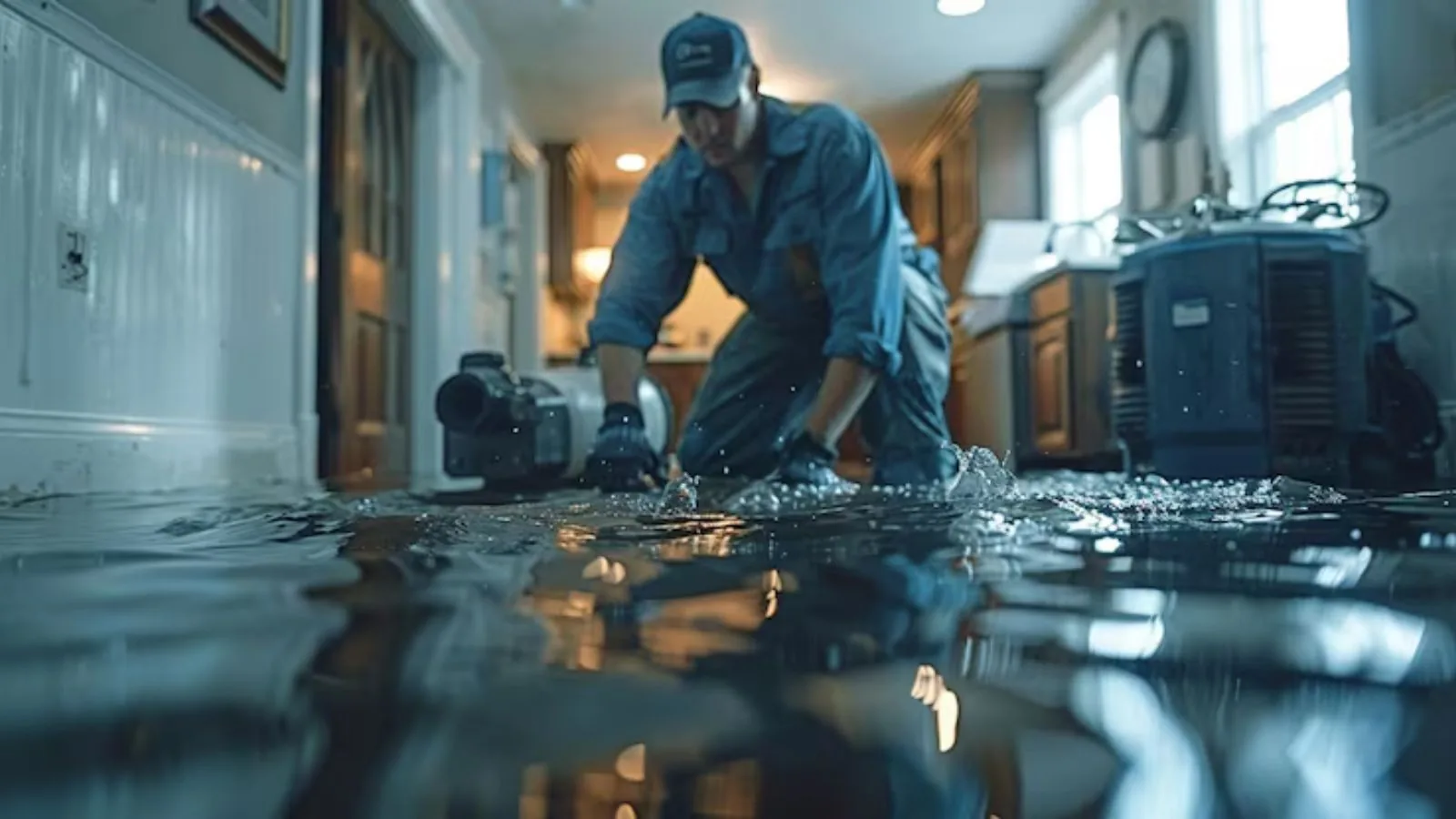
Water mitigation is the work done to stop damage from getting worse. It is the first phase after a water loss, and it is separate from the rebuild that follows. People often hear the word from an insurer or a contractor without a clear definition, so this guide lays out what the work usually includes.
The phases
| Phase | What happens | More detail |
|---|---|---|
| Assessment | Find the water source, the category of water and the wet area | Moisture meter and thermal camera |
| Extraction | Remove standing water | Water extraction |
| Removal | Take out materials that cannot be saved | Pad, insulation, soft drywall |
| Drying | Air movers and dehumidifiers until readings are dry | Structural drying |
| Documentation | Photos, readings and an itemized scope | For the adjuster |
What mitigation is not
Mitigation does not fix the pipe, patch the roof or rebuild the walls. A plumber or roofer handles the cause, and a contractor or the restoration company handles the rebuild. Keeping the three separate helps when reading an estimate. A mitigation invoice should show extraction, removal, drying and documentation, not paint and flooring.
Water categories
The category of water decides how the work is done. Category 1 is water from a clean source, such as a supply line. Category 2 is gray water with some contamination. Category 3 is heavily contaminated, such as sewage or outside flood water. Categories can worsen the longer water sits, which is why speed matters. See sewage backup cleanup and flood damage cleanup for the contaminated cases.
How to tell a mitigation estimate from a repair estimate
- Mitigation lines include extraction, equipment days, removal and monitoring visits.
- Repair lines include drywall, flooring, trim, paint and cabinets.
- A single lump sum with no breakdown makes review harder.
- Equipment is typically charged by the day, so the readings that end drying matter.
What a first visit looks like
A first visit is mostly looking and measuring. The crew confirms the source is off, checks for electrical hazards, finds the edges of the wet area and photographs everything before touching it. Only then do pumps and extraction tools come out. The scope that follows is based on what the readings show, which is why two similar-looking losses can have different plans.
Expect questions about when the water started, what category it might be, what the flooring and walls are made of and whether anyone has already removed materials. The answers change the plan. If you have photos from before the cleanup, share them, since they help show how far the water traveled.
Why the clock matters
Wet materials deteriorate and the category of water can worsen as time passes. Carpet that could have been dried in a day can need replacement after several. Mold needs moisture, so shortening the wet period is the practical defense. This post makes no health claims, and the mold remediation page covers what follows if growth starts.
What you can do before the crew arrives
- Stop the water at the source if you can do so safely.
- Stay out of water that touches electrical equipment.
- Move valuables and electronics up and away from the wet area.
- Photograph the damage before moving or removing anything.
- Call and describe where the water is and what is causing it.
Mitigation versus remediation
The two words are often confused. Mitigation here means stopping damage from spreading after water arrives. Remediation is most often used for removing something specific, such as mold. A water loss can involve both, in that order, and a company that offers one may or may not offer the other. Ask which of the two is in the estimate before you compare prices.
Also ask whether the same crew will do the repairs. Some companies stop at drying and hand off to a contractor, and others rebuild as well. Neither approach is wrong, but a clear handoff avoids gaps between the end of drying and the start of the rebuild.
How long mitigation usually takes
Extraction can take hours. Drying takes days, and the number depends on the readings, not on a schedule. Rebuilding comes after, sometimes weeks later. A company that gives you an exact finish date before it has taken readings is guessing. A company that tells you what will decide the date, and when it will update you, is giving you something you can plan around.
A Burlingame note
Local conditions shape the mitigation call. Burlingame buys its water from the San Francisco Public Utilities Commission, and the city's Water Division maintains the mains up to the meter. If the break is at the main or meter, the city handles it. Reports go to 650-558-7670 on weekdays or through the Burlingame Police Department at 650-692-0604 after hours. Anything after the meter is yours, and that is where mitigation starts.
Where storms are the cause, the 2022 New Year's Eve storm is a useful reminder. Local reporting said Public Works took more than 200 emergency calls, so many homes were waiting at once. See storm water damage cleanup and the San Mateo page for how those calls are handled.
Frequently asked questions
Is mitigation the same as restoration?
Mitigation is the emergency phase. Restoration often includes both mitigation and the repair that follows.
Does mitigation include repairs?
No. Repairs such as drywall, flooring and paint are scoped separately.
Why is equipment charged by the day?
Drying takes days and the equipment is in use throughout. Readings decide when it comes out.
What are water categories?
Category 1 is clean, 2 is gray and 3 is heavily contaminated. Water can move to a higher category if it sits.
Who handles a water main break in Burlingame?
The city's Water Division handles the mains up to the meter. Report to 650-558-7670 on weekdays or to the Burlingame Police Department at 650-692-0604 after hours.
Water still spreading or not sure what you are looking at? The line is open 24/7.
✆ Call (833) 521-1033