
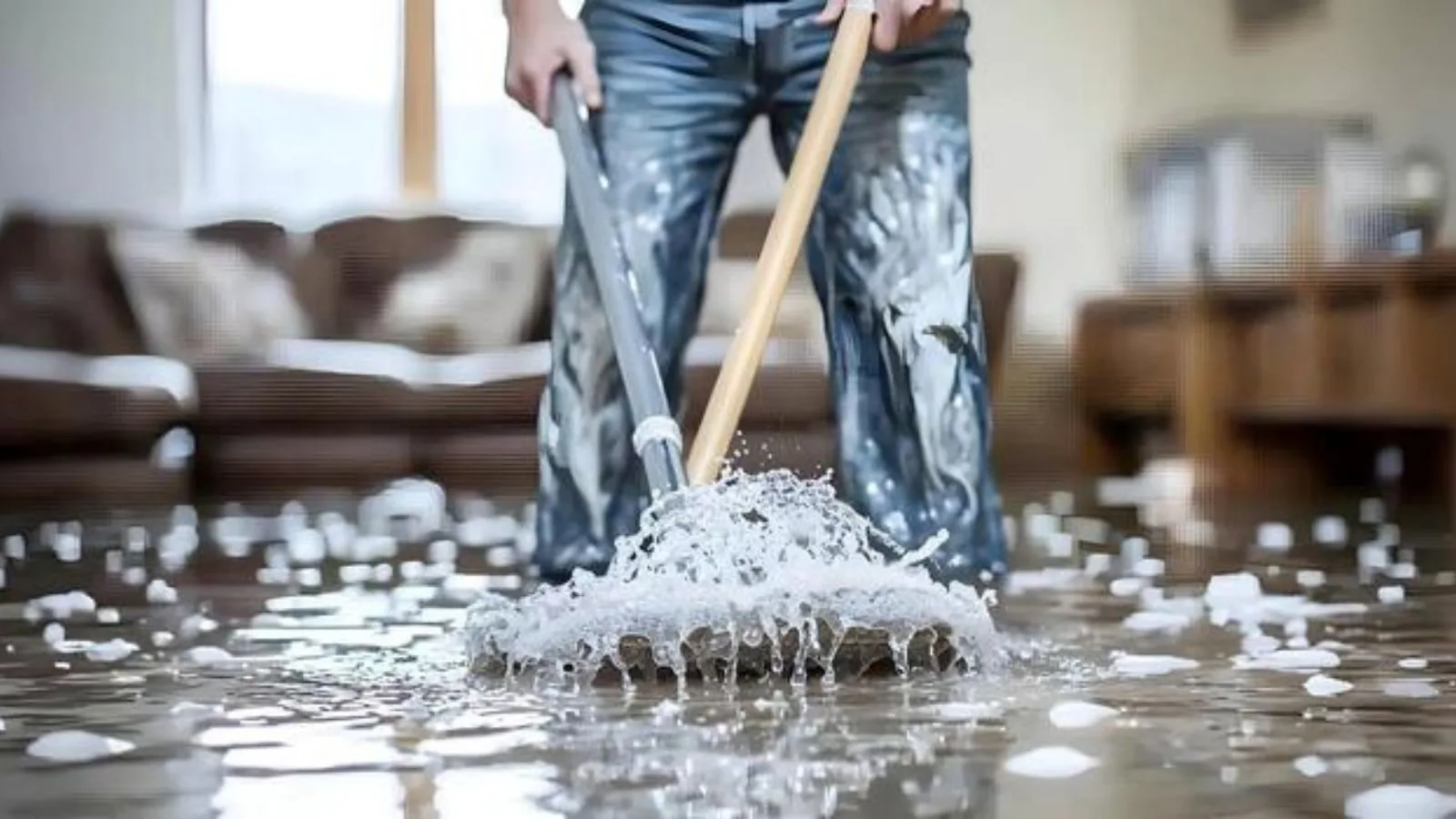
Not every wet floor needs a crew. A glass of water on a tile floor is a towel job. A washing machine overflow across carpet is different. The decision comes down to a few factors: where the water came from, how much there is, what it touched and how long it has been there. This guide gives a way to sort the cases.
Start with the source
| Source | Category | Usual answer |
|---|---|---|
| Clean supply line or sink overflow, small area, caught fast | Clean water | Often a DIY case |
| Appliance leak that ran for hours | Clean to gray water | Often call a pro, since water travels |
| Toilet overflow with waste | Contaminated | Call a pro |
| Sewer or drain backup | Contaminated | Call a pro, see sewage backup cleanup |
| Outside flood water | Contaminated | Call a pro, see flood damage cleanup |
Things you can reasonably do
- Wipe and mop up a small amount of clean water on a hard floor.
- Run fans and a dehumidifier in a small room after a small clean spill.
- Move furniture and rugs off wet areas to let air in.
- Wipe down hard surfaces and let them dry fully.
- Photograph everything for your records.
Things to leave to a professional
- Water that touched carpet pad, insulation or the inside of walls.
- Any water from a drain, sewer or outside.
- Water that has been present for more than a day or so.
- Anything near electrical outlets, panels or appliances.
- A smell that continues after surfaces look dry.
The reason is not that professionals are more careful. It is that they have meters that find hidden water and equipment that dries structures. A wall can feel dry while the cavity holds water, and fans in the room do not reach it. See structural drying for how that is handled, and water extraction for how standing water is removed.
A simple decision test
- Is the water clean, from a supply line or a tap? If it is from a drain or outside, call a pro.
- Is the wet area small, like a few square feet on a hard floor? If it reached carpet, walls or several rooms, call a pro.
- Did you catch it within hours? If it has been a day or more, call a pro.
- Can you reach and dry every wet surface? If water could be inside a wall or under a floor, call a pro.
- Is any electrical equipment near the water? If yes, stay out and call a pro.
Hazards to respect
Electricity and water do not mix. Do not use a household wet vacuum or fan while standing in water, and do not touch outlets or cords that are wet. Do not wade through contaminated water. If a ceiling is bulging, stay out from under it. Safety comes before saving the floor.
Fans, dehumidifiers and what they do
Household fans move air across surfaces and speed evaporation. A dehumidifier pulls moisture from the air, which helps surfaces keep drying instead of reabsorbing. Together they can handle a small clean spill. They do not replace a meter, and they cannot dry inside a wall. If the smell comes back after you have dried the room, there is probably moisture you have not found.
Document either way
Even if you handle it yourself, photograph the damage and keep a note of what happened and what you did. If damage appears later, those records are useful for your insurer, and the guide on claim steps covers what to keep. A moisture meter is inexpensive and gives you numbers if you want to check your work.
If you decide to do it yourself
- Stop the source and remove standing water with towels, a mop or a wet vacuum on a dry, grounded outlet.
- Lift small rugs and furniture legs off the floor and prop up skirts and drapes.
- Open windows if the outside air is drier, and run fans and a dehumidifier in a closed room.
- Check again after a day: feel walls, baseboards and carpet edges, and smell for mustiness.
- If anything still feels cool or damp after two days, take a moisture reading or call for one.
The follow-up check matters more than the first mop-up. Most DIY drying failures happen because someone stopped when the surface looked dry. Treat a lingering smell or a cool, damp patch as a result that needs a second look.
A Burlingame note
Burlingame's climate and housing make some DIY choices easier and some harder. Many homes here are older with plaster walls and raised foundations, which hide water well. A spill near a plaster wall base is worth a meter reading before you assume it is dry. The city's Building Division at 650-558-7260 can say whether repairs after water damage need a permit.
If the water came from the street, a drain or a creek, that is a city matter first. Public Works at 650-558-7670 handles emergency flooding and blocked storm drains, and after hours the Burlingame Police Department at 650-692-0604 takes reports. See the pages for San Mateo and El Granada to see how calls from nearby places are handled.
Frequently asked questions
When can I dry a wet floor myself?
When the water is clean, the area is small, you caught it fast and you can reach every wet surface.
Is a household fan enough for a wet wall?
Usually not. Walls can hold water inside the cavity, and fans in the room do not reach it.
What if I am not sure?
Take a moisture reading or call and describe it. A short call costs less than a wall that stays wet.
Is contaminated water ever a DIY job?
No. Water from a drain, sewer or outdoors should be handled with protective equipment.
Do I need a permit for repairs after water damage?
It depends on the work. The city's Building Division at 650-558-7260 can say.
Water still spreading or not sure what you are looking at? The line is open 24/7.
✆ Call (833) 521-1033